Sunday, November 18, 2012

In a Rut Meal #1

With a fridge low on grub and odd and end leftovers, one tends to get a little inventive-especially if one does not have a microdork (for those who don't know micro+dork = term for microwave). If you have chicken, italian dressing, and a fruit or veggie, you've got a meal in a rut.


CHICKEN RUT
Take the chicken you have off the bone into desired sized chunks (Works best if your chicken is breast) and toss them into a saute' pan with italian dressing half way up the chicken with 1/2 c. water at least. Just enough that the dressing is watered down so it's not as strong anymore yet doesn't lose it's taste. Turn or mix or however you want to make sure the dressing coats all of the chicken on every side. Make sure not to boil away your chickens dressing because you will use it later.

  • You can use your fave dressing  but this works well with pregnant women-even with mild to low morning sickness in the first few months of pregnancy. If you have strong morning sickness through the whole pregnancy, I feel for you.

For your veggie (Let's say: potatoe) you may boil them until they are easily stabable or you can bake them. time usually matters to the size. small ones with holes poked in them that appear 'baby' size could bake for half an hour where as stabbed standard sized ones can take about an hour at 400 degrees. A potatoe isn't done until they are kinda squishy.

When everything is finally done, take a plate with a smaller than average sized bowl in its center and place the chicken around the little bowl and the watered down italian juice into the little bowl. Use a desured sized plate to serve your potatoe on while everyone takes chicken to break up on their plate or eats as is and dunks their pieces into the juice oriental style.

  • As stated before about how you can use your fave veggie or fruit, you can also use your fave meat as well.

Tuesday, September 4, 2012

Orange Chicken Recipe


Orange Chicken

Orange ChickenOrange Chicken
Ingredients:
Chicken-
2 lbs boneless skinless chicken breasts (cut into 1-1/2” cubes)
1 ½ cups all purpose flour
1 eggs (beaten)
¼ teaspoon salt
¼ teaspoon pepper
Oil (for frying)
Orange Sauce-
1 ½ cups water
2 tablespoons orange juice
¼ cup lemon juice
1/3 cup rice vinegar
2 ½ tablespoons soy sauce
1 tablespoon orange zest (grated)
1 cup packed brown sugar
½ teaspoon ginger root (minced)
½ teaspoon garlic (minced)
2 tablespoons green onion (chopped)
¼ teaspoon red pepper flakes
3 tablespoons cornstarch
2 tablespoons water

Cooking Instructions:
Orange ChickenOrange Chicken
Step 1: Combine flour, salt, and pepper. Dip chicken in egg mixture and shake in flour mixture to coat. Deep fry chicken in batches at 375 degrees in a deep fryer (or use a wok) until completely cooked.
Orange ChickenOrange Chicken
Step 2: Meanwhile, in a large saucepan combine 1 ½ cups water, lemon juice, orange juice, rice vinegar, and soy sauce. Blend well over medium heat for a few minutes. Stir in brown sugar, orange zest, ginger garlic, and onion. Bring to a boil.
Step 3: Combine 3 tablespoons of cornstarch with 1/4 cup of water and mix thoroughly. Slowly stir cornstarch mixture into sauce until it thickens. Pour sauce over breaded chicken, and if desired add red pepper flakes and garnish with green onions

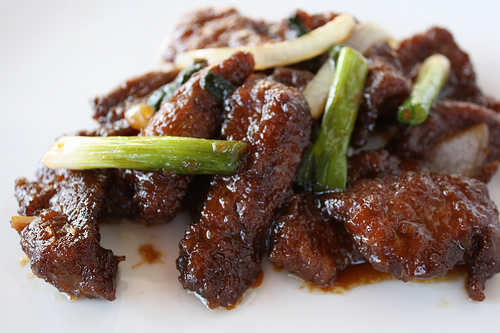
Mongolian Beef Recipe

By Bobby In Recipes |

Ingredients:
1 lb flank steak
¼ cup cornstarch
2 teaspoons vegetable oil
½ teaspoon ginger (minced)
1 tablespoon garlic (minced)
½ cup soy sauce
1/2 cup water
½ cup brown sugar
2 tablespoons rice wine
½ teaspoon red pepper flakes
2 green onions (sliced)
1 medium onion (sliced)
Oil (for frying)


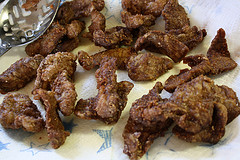
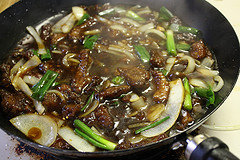
Mongolian beef is another dish that can occasionally be found at the Chinese buffets. Despite its name, Mongolian beef doesn’t come from Mongolian cuisine at all but is rather another Chinese-American dish. Mongolian beef consists of sliced fried strips of steak coated with a sweet and spicy sauce. I actually deep fried the steak strips and then added them to the wok, but this recipe calls for frying the steak in a wok first. I found this dish to have very good flavor and just the right amount of sweetness and spice for my liking. Mongolian beef is one of the more popular Chinese-American beef dishes in the United States. Serve with white rice and broccoli florets. Enjoy.


Cooking Instructions:

Step 1: To make the sauce- in a sauce pan heat 2 teaspoons of oil. Add garlic and ginger, stir fry 10 seconds. Add soy sauce, wine and water. Add brown sugar and dissolve into the sauce. Add red pepper flakes. Bring the sauce to a boil and boil for 2-3 minutes. Remove from heat.
Step 2: Slice the flank steak against the grain into ¼” thick slices. Tilt the knife blade at a 45 degree angle to the top of the steak to get wider cuts. Toss the steak slices with cornstarch and let the beef sit for 10 minutes (this is very important, do not skip).
Step 3: Heat up about a cup of oil in your wok to about medium heat. Add the beef slices to the wok and cook for 3 minutes (or use a deep fryer). 

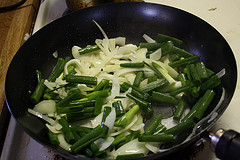
Step 4: Remove the meat from the wok with a slotted spoon and drain on paper towels. Drain all of the oil from the wok expect about a tablespoon. Add onions to the wok and stir fry for 2 minutes. Add the steak back to the wok and pour in the sauce. Cook while stirring until the sauce began to bubble.
(Makes 2 Servings)

Honey Lime Chicken (inspired by Sunset Magazine)


Serves 4-6

Marinade:
1/4 cup extra virgin olive oil
1/4 cup freshly squeezed lime juice (2 limes), plus the zest of both limes
2 Tablespoons honey
1/2 teaspoon cayenne pepper
1 teaspoon kosher salt
1 teaspoon freshly cracked black pepper
2 pounds of chicken (I used boneless skin-on breasts, but use whatever suits you)

In a large zip top plastic bag combine all of the ingredients except the chicken. Seal bag completely and mix well. Add chicken to bag, turn to coat and reseal. Place in refrigerator overnight.

Heat grill (either outdoor grill, or indoor grill pan) to medium high. Grill chicken for approximately 6-7 minutes on each side or until juices run clear.  If you're using fairly thin chicken breasts, cut time down.

Crockpot Honey Sesame Chicken

Yield: 4 servings

Ingredients:

1 lb. boneless, skinless chicken thighs, about 5
Salt and pepper
1 cup of honey
1/2 cup of low sodium soy sauce
1/4 cup ketchup
2 tbsp. vegetable oil
2 cloves of garlic, minced
1/2 cup diced onion
1/4 tsp. red pepper flakes
Cornstarch
Sesame seeds

Instructions:

  1. Place the chicken thighs in the crockpot insert and sprinkle salt and pepper on both sides.
  2. In a medium sized bowl, combine honey, soy sauce, ketchup, oil, garlic, onion, and red pepper flakes. Stir to combine well. Pour over the chicken in the crockpot.
  3. Cook on low for 3-4 hours or high for 1 1/2-2 1/2 hours.
  4. When done, remove chicken from stock pot and cut into chunks. Prior to putting the chicken back in the stockpot, combine some cornstarch in water and whisk it into the crockpot to thicken up the sauce a bit. Throw the chicken back in and stir around to recoat the chicken in the sauce.
  5. Serve hot over a bed of white rice (optional) and sprinkle some sesame seeds on top.

Pesto Stuffed Shells

INGREDIENTS COST
12 oz. jumbo shell pasta $1.24
15 oz. part skim ricotta $1.83
4 oz. (1 cup) shredded mozzarella $0.98
1/2 cup basil pesto $1.96
1 large egg $0.15
2 cups fresh spinach (optional) $0.33
1 Tbsp cooking oil $0.04
3 cups (1 jar) pasta sauce $1.98
TOTAL
$8.51

Total Recipe cost: $8.51
Servings Per Recipe: 7 (three shells each)
Cost per serving: $1.42
Prep time: 10 min. Cook time: 45 min. Total: 55 min.


STEP 1: In a bowl, mix together the ricotta, mozzarella, pesto and the egg (the egg keeps the filling from getting too runny when cooked). Roughly chop the spinach and stir it into the cheese mixture. Refrigerate the filling until you are ready to use it.

STEP 2: Cook the pasta according to the directions on the box (boil for 12 min.). add 1 Tbsp of cooking oil to the boiling water to keep the shells from sticking to each and the pot. You will still need to gently stir a few times during cooking. Be careful not to over cook the pasta or else it will rip easily and be too mushy after cooking with the filling and sauce. Drain the pasta and rinse with cool water to stop the cooking process. Let the pasta drain.

STEP 3: Preheat the oven to 350 degrees. The shells roll up tight (see photo below) when they are cooked so use the fingers on one hand to hold them open as you spoon about 3 Tbsp of pesto cheese mix into the center of each. There should be enough pesto cheese mix to fill the shell so that it stays open just slightly (the edges should be about 1/2 inch apart). Fill as many shells as you can with the cheese mix.

STEP 4: Spread one cup of pasta sauce in the bottom of a glass baking dish. I used a 9.5x14 inch dish because that was all that I had available at the time but it was too big for 22 shells. You want to pack them in tightly in a single layer. If you space them too far apart, they will dry out during the cooking process. Place all of the shells in the baking dish as close together as possible and pour the remaining 2 cups of sauce over top. Bake for about 30 minutes at 350 degrees or until the sauce is bubbling up around the edges.

General Tso’s Chicken


Serves 4 as part of a multi-course meal, 2 to 3 as a main entree


1 pound boneless, skinless chicken thighs, sliced into 1-inch cubes
1 1/2 cups cornstarch
1/2 teaspoon salt
1/2 teaspoon freshly ground black pepper
3 peanut or vegetable oil for frying, plus 1 tablespoon for stir-frying
8 dried whole red chilis, or substitute 1/4 teaspoon dried red chili flakes
2 cloves garlic, minced
1 teaspoon white sesame seeds, for garnish
Scallions, green parts thinly sliced, for garnish

Marinade:
1 tablespoons soy sauce
1 tablespoon Chinese rice wine or dry sherry
2 egg whites

Sauce:
1/4 cup chicken stock, or substitute water
1 1/2 tablespoons tomato paste
1 tablespoon soy sauce
1 tablespoon rice vinegar
1 teaspoon hoisin sauce
1 teaspoon chili paste
1 teaspoon sesame oil
1 tablespoon sugar
1 teaspoon cornstarch

1. Prepare the marinade: In a large bowl, combine the soy sauce, rice wine, and egg whites. Coat the chicken to the marinade mixture and let sit for 10 minutes.

2. Prepare the sauce: In a small bowl, combine the chicken stock, tomato paste, sugar, soy sauce, rice vinegar, hoisin sauce, chili paste, sesame oil, sugar, and the 1 teaspoon of cornstarch. Stir until the sugar and cornstarch are dissolved. Set the sauce aside.

3. In a large bowl or deep plate, toss the 1 1/2 cups cornstarch with the salt and pepper. Coat the marinated chicken in the cornstarch and shake off any excess before frying.
4. Heat the 3 cups of peanut or vegetable oil in your wok until it registers 350°F on an instant-read oil thermometer. Working in 2 or 3 batches, add the first batch of chicken cubes and fry until golden brown on the outside and cooked through, about 4 to 5 minutes. Remove the chicken with a slotted spoon and drain on paper towels. Repeat with the rest of the chicken.

5. Drain the oil into a heatproof container and save for discarding. Wipe the wok with a paper towel to remove any brown bits, but don’t wash.

6. Reheat the wok or skillet over medium-high heat. Add another 1 tablespoon of oil and swirl to coat the base and sides. Add the dried chilis and garlic to the wok and stir-fry until just fragrant, about 20 seconds. Pour in the sauce mixture and stir until thickened, about 1 to 2 minutes.

7. Return the chicken to the wok and stir well to coat with sauce. Transfer the chicken to a serving dish. Garnish with white sesame seeds and scallions. Serve with white rice and vegetables.

White Cheddar Chicken Pasta

For the chicken:
1 pound boneless, skinless chicken breasts, trimmed and cut into 1 inch pieces
1 tsp dry mustard
1 T fresh thyme
1/2 tsp salt
1/2 tsp pepper
1 T olive oil

Heat olive oil in a large skillet over medium heat. Mix together mustard, thyme, salt and pepper and sprinkle over chicken pieces. When pan is hot, add chicken and brown about 3 minutes per side until cooked through. Remove to a plate and cover with foil.

For the pasta:
1 pound rotini or other short cut pasta
2 T butter
2 T flour
2 cloves garlic, minced
1 small onion, finely diced
1/4 cup dry white wine
1 T Dijon mustard
8 oz sharp white cheddar cheese, grated
2 cups milk (I used skim milk but mixed in about 2 T heavy cream)
1 T fresh thyme
1 T fresh oregano
Crushed red pepper flakes to taste
Parmesan cheese to taste

Heat water to boil in a large stock pot for pasta, add salt and pasta and cook to al dente and drain according to directions. Meanwhile, melt butter in a large skillet over medium heat. Add flour and whisk to combine. Add wine, garlic, onions, and mustard. Cook about 5 minutes, until onions are translucent. Reduce heat to low and slowly add milk, stirring to combine. Cook about 5-7 minutes more until mixture begins to thicken. Add cheese and stir to melt. Add chicken and pasta and toss to incorporate sauce. Add thyme and oregano and serve topped with crushed red pepper flakes and Parmesan cheese.

Cheesecake Stuffed Strawberries

from Nutmeg Nanny
Print this post
Ingredients:
-1 lb large strawberries
-8 oz. cream cheese, softened (can use 1/3 less fat)
-3-4 tbsp powdered sugar (4 tbsp for a sweeter filling)
-1 tsp vanilla extract
-graham cracker crumbs

Directions:
1. Rinse strawberries and cut around the top of the strawberry. Remove the top and clean out with a paring knife, if necessary (some may already be hollow inside). Prep all strawberries and set aside.
2. In a mixing bowl, beat cream cheese, powdered sugar, and vanilla until creamy. Add cream cheese mix to a piping bag or ziploc with the corner snipped off. Fill strawberries with cheesecake mixture. Once strawberries are filled, dip the top in graham cracker crumbs. If not serving immediately, refrigerate until serving.

Roasted Garlic Pizza

1 packet yeast (2 1/4 teaspoons)
1 cup warm water
2 1/2 cups flour
1 teaspoon honey
1 teaspoon salt
2 tablespoons olive oil
cornmeal

Preheat oven to 400F. In a large bowl, combine the yeast and warm water and stir until the yeast dissolves. Add the flour, salt, honey and olive oil; stir to combine using first a wooden spoon then your hands. Let dough rest for 10 minutes.

Sprinkle baking sheet with cornmeal and press dough into it to your desired thickness. Top with your toppings and bake for approximately half an hour or until crust is golden, toppings are heated through and cheese is bubbly.

Roasted Garlic Pizza

1 recipe Easiest Pizza Dough In The World
1 head garlic
olive oil
salt & pepper
shredded mozzarella cheese
oregano

Preheat oven to 400F.

Keeping head of garlic whole, peel away loose papery exterior. Cut just the top off the whole head of garlic and discard. Place garlic on aluminum foil and drizzle with olive oil, then sprinkle with salt and pepper. Take up ends of foil to form a package around the garlic and roast in preheated oven for 20-30 minutes. Allow to cool slightly.

Once garlic is cool enough to handle, unwrap from foil and place on cutting board (not wood, preferably). Using the non cutting edge of a knife, start at the un cut end of the garlic and press and squeeze the softened garlic from the head. Trim any tough tops and using the same knife, smear each clove against the board. The cloves will easily become a paste - roasting the garlic sweetens and softens it beautifully.

Gather up the garlic paste and using a spatula, spread over the pizza dough. Top with shredded mozzarella and oregano. Bake according to pizza dough instructions above. Let cool just slightly before slicing and serving.

Honey Sesame Chicken

Bites of deep fried chicken pieces coated with a honey sesame glaze.
Ingredients
 
  • 12 oz   chicken breast, cut into bite sized pieces
    localoffersIcon
  • 1 tbsp light soy sauce
  • 1 tbsp cooking wine
  • 1/2 tbsp sesame oil
  • 1 tsp sugar
  • 2 tbsp flour
  • 1 tbsp cornstarch
  • 1/2 tsp salt
  • 1/4 tsp pepper
  • Sauce:
  • 1 tbsp sweet chili sauce
  • 2 tbsp tomato ketchup
    localoffersIcon
  • 1-2 tbsp honey
  • 1 tbsp oyster sauce
  • 2 tbsp light soy sauce
  • 1/4 cup water
  • 1 tbsp toasted sesame seeds
Get Coupons
Instructions
Marinate chicken in soy sauce, wine, sesame oil and sugar for about an hour.  Mix flour and cornstarch and place in a large ziploc bag.  Drain chicken and add to flour mixture.  Shake gently to coat.  Fry in hot oil (350 degrees) until golden brown.  Drain on paper towels.To make sauce, mix chili sauce, ketchup, honey, oyster sauce, soy, sauce and water in a medium sauce pan.  Bring to a boil then simmer until sauce begins to thicken.  Toss sauce with chicken pieces, sprinkle with sesame seeds and serve.
Details
Prep time: Cook time: Total time: Yield: 4 Servings

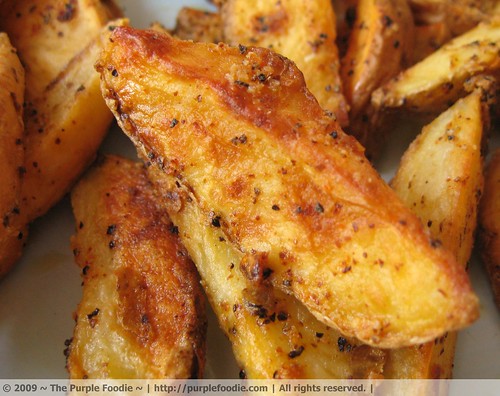
Garlicky Baked Fries

Adapted from: Lottie + Doof
8 garlic cloves, minced
6 tbsp extra virgin olive oil
3 russet potatoes (about 8oz each), each cut into 12 wedges
3 tbsp cornstarch/cornflour
1 1/2 tsp coarse sea salt
1 1/2 tsp freshly ground black pepper
½ tsp garlic powder
1/4 tsp cayenne pepper

  1. Preheat oven to 225°C/440° F.
  2. Combine the garlic and oil in a large bowl, warming it until the garlic is fragrant, about 1 minute.
  3. Transfer 5 tablespoons of the oil (leaving the garlic in the bowl) to the baking sheet, coating it well.
  4. Add the potatoes to the bowl with the garlic mixture and toss to coat. Wrap tightly in plastic wrap and microwave on high power until the potatoes are translucent around the edges, 3 to 6 minutes, shaking the bowl to redistribute the potatoes halfway through cooking.
  5. Combine the cornstarch, salt, pepper, garlic powder, and cayenne in a small bowl. Sprinkle over the hot potatoes and toss well to coat.
  6. Arrange the potatoes in a single layer on the prepared baking sheet and bake, turning once, until deep golden brown and crisp, 30 to 40 minutes.
  7. Serve with ketchup, mayo or sour cream.

Easy Barbecued Ribs

1.5 tbsp sweet paprika (3tbsp) (Edited Feb '12 to say I've also used mild smoked paprika with fantastic results)
1 tbsp light brown sugar, lightly packed (2 tbsp)
1/8 tsp cayenne pepper (1/4 tsp)
S&P to taste (about 1 tsp each is what I used)
2 lbs pork (baby) back ribs (6 lbs) - leave the membrane on the ribs to help hold them together
1 cup barbecue sauce (3 cups)
Vegetable oil spray. 

In a small bowl, mix together paprika, brown sugar, cayenne and S&P.  Rub this mixture all over both sides of your ribs well.  Arrange ribs in the slow cooker by standing them up against the wall of the stoneware pot, thicker side down and meaty side against the pot.  Pour barbecue sauce over the ribs, cover and cook for 6-8 hours on low (I did 7 hours and they were perfect).  

Now comes the only stove/oven work involved, we need to reduce the sauce and then brown the ribs under the broiler.  These steps are what turn the ordinary into the extraordinary, so don't you dare skip them even if your ribs already look pretty good.  Once the initial slow cooking is done, very carefully (as they are tennnnderrrrr) remove the ribs to a baking pan which you have lined with foil and put a rack on (like in my photo collage), bone side up.  Set to the side.  Skim any fat that has risen to the top and strain all of the remaining juices from the slow cooker through a mesh strainer into a small saucepan.  Bring to boil and allow to simmer and reduce by about a third, approximately 15 minutes.  Put your oven's broiler on to heat up and make sure that there is an oven rack about 10 inches below the broiler element.  When the broiler is preheated, brush the ribs with sauce and broil for 3 or 4 minutes.  Take them out and very carefully flip them over, brush with sauce and broil again, meat side up, for approximately 9 minutes, taking them out once or twice to baste with more sauce.  Serve any remaining sauce on the side with the ribs.

Ratatouille's Ratatouille

  • This recipe is vegetarian
  • This recipe is gluten-free
  • Produce
  • Longish red bell pepper (1)
  • Onion (1/2)
  • Thyme, fresh (3 sprigs)
  • Tomato puree (1 cup)
  • Yellow squash, smallish (1)
  • Zucchini, smallish (1)
  • Cooking & Baking
  • Garlic cloves (2)
  • Olive oil (2 tablespoons)
  • Salt and pepper (1)
  • Dairy
  • Goat cheese, soft (3 tablespoons)
  •  

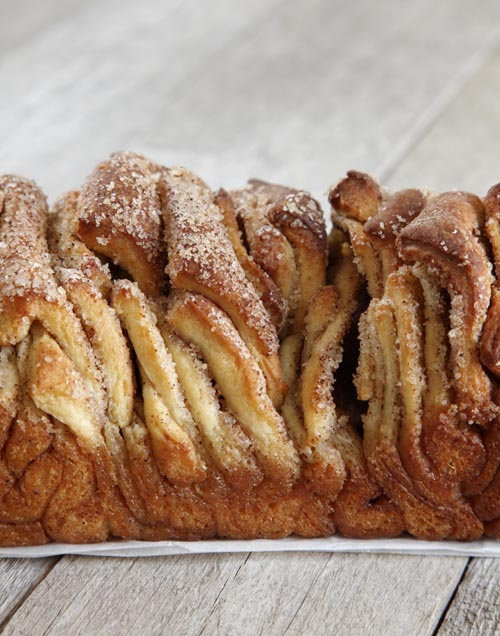
Cinnamon Pull Apart Bread

Adapted from Joy the B aker:
Ingredients for two 9x5x3-inch bread loafs:
For the dough:
5½ cups + 4 tablespoons all-purpose flour
½ cup sugar
4½ teaspoons active dry yeast
1 teaspoon salt
1 stick (4 oz./100 grams) butter
⅔ cup whole milk
½ cup water
2 teaspoons pure vanilla extract
4 large eggs, at room temperature, beaten
For the Filling:
1 cup granulated sugar
2 teaspoons ground cinnamon
1/2 teaspoon fresh ground nutmeg
½ stick (2 oz./50 grams) butter, melted


Preparation:
  1. In a large bowl, whisk together four cups of flour, sugar, yeast and salt. Set aside.
  2. In a small saucepan, melt together the butter and milk on medium heat until the butter is just melted. Remove from heat and add the water and vanilla extract. Let mixture cool for 2 minutes.
  3. Pour the milk mixture into the dry ingredients and mix with a spatula. Add the eggs and continue to stir until the eggs are incorporated into the batter. The batter will be quite sticky at this point.
  4. Add the remaining cup and a half of flour and continue to mix with a spatula for an additional 2 minutes, until ingredients are well combined. The dough will still be a little sticky.
  5. Place the dough is a large, greased bowl and cover with plastic wrap. Allow to rise, until doubled in size, for about 1 hour.
  6. Once the dough has risen, punch the dough and knead the remaining four tablespoons of flour into the dough. Cover with a clean kitchen towel and let rest for 5 minutes. Meanwhile, mix together the sugar, cinnamon and nutmeg for the filling. Butter the bread loafs.
  7. Cut the dough into two equal pieces, and place one piece back into a bowl and cover with the towel. Working on a lightly floured surface, roll out one piece of dough to 12 inches x20 inches (30 x 50 cm.).
  8. Use a brush to generously spread melted butter across the dough. Sprinkle with cinnamon and sugar mixture. Cut the dough vertically into six equal strips. Stack the strips one on top of another and slice the stack into six equal slices. You should have six stacks of six squares.
  9. Place the squares into the prepared bread loafs, so that they are standing up. Repeat with the second piece of dough.
  10. Preheat oven to 350ºF. (180ºC). Cover both loaf pans with a kitchen towel and allow to rise for 30-45 minutes, until doubled in size.
  11. Bake for 30-35 minutes, until the top is very golden brown. The center will be a bit soft. Allow to cool for 20 minutes before serving.

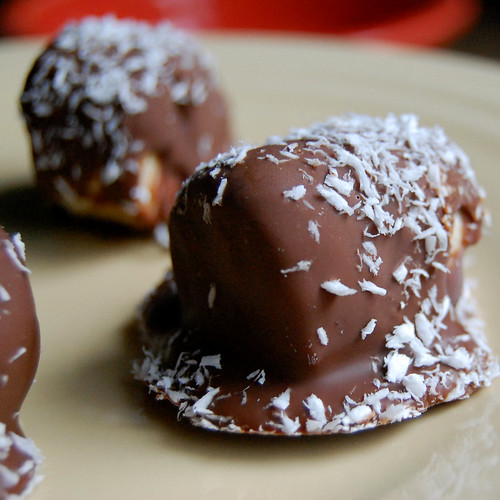
Frozen Banana Bites

  • 2 large bananas
  • 1/4 to 1/3 cup vegan chocolate chips
  • 1/4 to 1/3 cup natural peanut butter
  • Unsweetened coconut flakes

  1. Set out a large plate or bowl with a piece of parchment or wax paper on it.
  2. Cut up the bananas into good-sized chunks. Each banana should give you around 5 to 6 pieces.
  3. Heat the peanut butter and chocolate chips in the microwave on high for about a minute. Then stir until smooth.
  4. Dip the banana pieces in the chocolate-peanut butter mixture. Lay them out leaving some space between them on the parchment/wax paper. Then when you've "covered" them all, use the remaining mixture to spoon over the tops (for even more chocolate-y goodness).
  5. Then sprinkle the unsweetened coconut flakes on top. Transfer to the freezer for about an hour until hardened.
  6. You can enjoy them like this (but they really aren't frozen yet -- and when they're frozen, the banana tastes like vanilla ice cream) . . . I suggest then covering with some plastic wrap (or really you can do all of this in some kind of Rubbermaid container) and let freeze overnight.

Crockpot Chicken Tacos

Recipe from Tasty Kitchen
Serves: ~12 people

1 envelope Taco Seasoning (I use Old El Paso Reduced Sodium)
6 pieces Boneless, Skinless Chicken Breasts
1 16-ounce jar Salsa (I switch between brands, but Newman's Own is my favorite)

Dump everything into a crock pot and give it a little stir to blend the seasoning with the salsa. You do not need to add any water to the taco seasoning. Cook on high for 4 to 6 hours or on low for 6 to 8 hours. When done, the chicken should shred easily when stirred with a fork.

For tacos, serve the chicken with soft flour tortillas, guacamole, lettuce, shredded cheese and/or sour cream. This is very versatile and can be used for enchiladas, nachos, tostadas, quesadillas, etc. Any leftover chicken can then be used for tortilla soup (make it the next day or freeze the chicken to use at a later time).


2 cups of the shredded chicken
One 32oz box of chicken broth
One can corn(drain)
2 handfulls chopped cilantro
One squeezed lime
One can diced tomatoes (reg size)
One can diced tomatoes w/ chiles (if you can't find the can get another can of diced tomatoes and a can of diced chiles)
1/2 large yellow onion
One can black beans
2-3 table spoons of tomato paste
2 teaspoons of cumin
2 teaspoons of chile powder
2 teaspoons of garlic powder

Dump everything in a pot and simmer for ~30 minutes. Garnish with cheese and crispy tortilla strips!

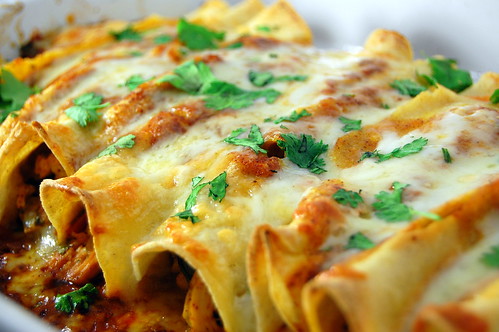
Chicken Enchiladas with Red Chile Sauce

adapted from Tide and Thyme, orginally from America's Test Kitchen
  • 1 medium onion, chopped fine
  • 2 jalapenos, seeded and chopped fine
  • 1 teaspoon canola oil
  • 3 medim cloves garlic, minced
  • 3 Tablespoons chili powder
  • 2 teaspoons ground cumin
  • 3 teaspoons sugar
  • 1 15-oz can tomato sauce
  • 1 cup water
  • 1 large beefsteak tomato, seeded and chopped
  • 1 pound boneless, skinless chicken breasts (2 large breasts)
  • 1 cup extra sharp white cheddar, shredded
  • 1 cup monterey jack cheese, shredded
  • 1/2 cup minced fresh cilantro
  • 12 (6-inch) soft corn tortillas
  • cooking spray
  • salt and ground black pepper


Preheat oven to 425.

Combine the onion, jalapeno, 1/2 teaspoon salt, and oil in a large saucepan. cover and cook over medium-low heat, stirring often, until the onions and peppers have softened, 8-10 minutes. Stir in the garlic, chili powder, cumin, and sugar, and cook until fragrant, less than 30 seconds. Stir in the tomato sauce, water, and chopped tomato. Bring to a simmer, and cook until slightly thickened, 5 minutes.

Nestle the chicken into the sauce. Reduce heat to low, cover, and cook until chicken is cooked through (thickest part reaches 160 degrees), about 12-20 minutes. Transfer the chicken to a plate, and set aside to cool.

Strain the sauce through a strainer into a medium bowl, pressing the onion mixture to extract as much liquid as possible. Transfer the onions to a large bowl and set aside. Season sauce with additional salt and pepper to taste.

Shred the chicken into bite-sized pieces. Add to the onin mixture, and add 1/4 cup of the enchilada sauce, 1 cup cheese, and the cilantro. Toss to combine.

Stack the tortillas on a plate and cover with plastic wrap; Microwave on high until warm and pliable, 40-60 seconds. Spread the tortillas on a clean work surface, and spoon 1/3 cup of the chicken mixture evenly down the center of each. Tightly roll each tortilla and lay seam-side down in a greased 9x13 inch baking dish.

Lightly spray the tops of the enchiladas with cooking spray. Place in the oven, uncovered, for about 7 minutes, or until the tortillas start to brown slightly (skip this step if you don't like the crunch).

Reduce heat to 400. Remove enchiladas and pour sauce evenly on top. Top with the remaining cheese. Cover dish with foil, and bake an additional 20 minutes, or until heated through.

Remove foil and bake another 5 minutes, until cheese browns. Remove from oven and let stand 10 minutes before serving.

Saturday, May 12, 2012

Asian Chicken Stir Fry

Stir fry dishes never have to be boring. They can be varied in so many ways. Instead of chicken, try pork or seafood. Vary the vegetables.

Easy to make. ..

Ingredients
2 tablespoons oil
1 pound boneless, skinless chicken, sliced
1 large onion, sliced,
1 red bell pepper, sliced
1 green bell pepper, sliced
4 stalks celery, bias sliced
1/2 cup Thai Sweet Chili Sauce or equal
2 cups prepared rice


Directions
1. Add 2 tablespoons of oil to a wok or fry pan. Cook the chicken until done and then remove it from the pan.
2. Cook the onion, peppers, and celery until just crisp-tender. Add the chicken. Stir in the Thai Sweet Chili Sauce. Serve immediately with the prepared rice.


Baker’s notes: One of the secrets of great stir fry dishes is to cook the vegetables in a hot pan but only until they are tender-crisp. They will continue to cook in the hot pan after you have removed the heat from the pan so stop cooking earlier than you might expect. 

I love love love love stirfry!!! I don't get to eat it as much as I'd like due to the fact that I'm the only one who likes it-so far since our daughter is still eating baby food :)

The 7 WORST Exercises to NEVER Do

These 7 exercises are popular with most workout enthusiasts, but they could actually be HARMING your body!
by Dr. Kareem Samhouri – CSCS, HFS
Neuro Metabolic Fitness & Rehab Expert
Author of the popular program:  Abs Strength Guide

Exercise is meant to help you, right?
Unfortunately, there are certain “exercises” in the gym that cause more harm than good. I’d like to take a strong look at the 7 most prevalent injury-causing exercises in most gyms. The worst part is that these exercises are pretty much useless when it comes to building strength or losing fat. There really isn’t much of a point in doing them, whatsoever, and yet they can destroy our results.
It’s time to put an end to the worst exercises on Earth. I’m here to help you understand how your body moves, why it responds to exercise the way it does, and how to minimize your risk while you maximize the effect from every exercise you do.
As a side note, I think it’s important to mention that the last thing I want is for you to feel discouraged; rather, it’s important that you feel inspired to know you have eliminated the negative from your exercise program. Now, you’ll be able to safely rely on the fact that “you’re doing it right” when you exercise. Plus, I think you’ll be shocked to realize how much you’ve learned about your body’s ideal positioning and muscle recruitment strategies with exercise.
The main reasons that an exercise would qualify in the following list is one or more of the following:
  1. Creates muscle imbalances
  2. Has zero functional benefit
  3. Winds up joint into unsafe position
If an exercise creates muscle imbalances, this can lead to joint deterioration all over your body and even blunt fat loss. You see, once your joints are out of position, your body has sub-sensory pain signals taking place all over the body. These pain signals tell your brain to shut down the muscles in the area in order to avoid “pulling on the injury” and causing more damage. The end result: no muscle contraction and weaker muscles.
We exercise to be stronger in our daily lives and live a longer/higher quality of life. If an exercise has no true benefit in either or both of these categories, then what’s the point?
Just because someone tries an exercise in a gym isn’t a reason to make this part of your routine. The gym is full of mostly amateurs, including several of the personal trainers at big name gyms. After all, that’s where many of us started out at one point or another…
“Winding up your joint” into an unsafe position involves increased pressure on the labrum or capsule of a joint while performing an exercise. Simultaneously, it’ll be likely that a muscle is being overstretched while being recruited to contract. This is a recipe for disaster. Instead, let’s find a position of rest for the joint and then exercise it. This will assist the natural delivery of nutrients to the joint and joint capsule.
Also important to mention, we should consider these two terms in understanding the benefits/consequences of an exercise:
  1. Active Insufficiency – this is when a muscle is over-shortened and you try to use it. An example is if you “make a muscle” with your biceps and then see how strong you are. The muscle is already short, so you’re not as strong as you are in the middle of the movement.
  2. Passive Insufficiency – this is when a muscle is over-lengthened and you try to use it. An example is if you tip your wrist back all the way and then try to curl your fingers. Because your wrist flexors are over-stretched, your muscles are having a hard time contracting. Again, you’d be much stronger if your wrist were in neutral, or halfway in between.
Lastly, I’d like to discuss the difference between open and closed chain exercises, and how this will affect the functional carryover in a particular exercise:
  • Open-chained exercise:Fixed proximal segment, moving distal. Proximal means closer to your heart and distal means closer to your fingers and toes. So, in this case, it would be our hand moving towards our elbow (biceps curl), foot moving towards our buttocks (leg curl), etc.
    • It’s important to note that open-chained exercises are very effective for sculpting muscles in the final stages of bodybuilding, or isolation training for rehabilitative purposes; although, they do create much more torsion into the joint and generally only exercise one muscle at a time. Due to these being isolation type movements, the metabolic effect of open-chain exercises is generally much lower than closed-chain movements.
  • Closed-chain exercises:Fixed distal segment, moving proximal. This is just the opposite, so your foot would be fixed as your body moves closer to it (squat/deadlift), or your hands would be fixed as your body moves closer to them (push up, pull up.)
    • Likewise, it’s noteworthy that closed-chain exercises are very effective at building balanced joints, spiking metabolism, and increasing functional gains in daily life while reducing or eliminating risk of injury. Closed-chain exercises have a higher metabolic effect because more muscle groups and joints are being used.
Ok, you’ve already got a great background for judging exercises and their quality, or lack thereof. Now, let’s dive in and take a look at the 7 worst exercises:

1) Leg Presses
These are awful. Here’s why: Creates muscle imbalances, zero functional benefit, winds up joint to unsafe position
Muscle Balance Perspective:
  • Quads are generally stronger than hamstrings; this reinforces the problem.
    When your quadriceps overpower your hamstrings in deep knee flexion, there is increased torsion placed into the meniscus, increasing the likelihood of knee injury.
  • Quads and glutes should be used as a pair. In this case, they are not being used effectively.
    When your glutes do not fire while using your quads with a great level of force, there is increased risk of low back injury.
An imbalance between your quadriceps and hamstrings can quickly result in a number of knee issues, including patellofemoral (kneecap) and meniscus damage. Even worse, when your quads overpower your hamstrings, it’s not uncommon to develop restrictions in these muscles as your body attempts to even things out. These restrictions lead to increased pull on the top of your pelvis, tipping it forward, and placing pressure in your low spine.
This all sounds complicated, but let’s make it easy. Just stand up and lean backwards. If your hip flexors are tight, you’ll feel a stretch in the front of your thighs. It’s a good bet that we should get you training in more functional abs positions. You may already be spending too much of your day in this pre-shortened position, causing ‘active insufficiency’ to take place.
Functional Benefit Assessment:
  • In most cases, people aren’t coming down to a full 90 degrees of knee flexion, which is needed for getting in/out of a chair.
  • Even in these cases your abs are so pre-contracted (active insufficiency) and low back extensors so overstretched (passive insufficiency) that it’s tough to use your quads with any abdominal or low back support.
  • Since your abs and low back are out of the picture, this exercise loses a lot of its functionality.
Metabolic Effect:
The metabolic effect of this exercise is less because the number of muscles used is less than similar weight-bearing (closed-chain) exercises. Ultimately, the number of muscles and joints you use in a given exercise determines the metabolic effect of that exercise.

2) Leg Extensions
Muscle Balance Perspective:
  • Quads are generally stronger than hamstrings; this reinforces the problem.
  • Quads and glutes should be used as a pair. In this case, they are not being used effectively.
  • Interestingly, if you are having a hard time contracting your vastus medialis oblique (VMO) in your knee, the last 15 degrees of this movement can be helpful, but careful with the torque into your knee joint.
  • Again, only for the last 15 degrees until your knee is totally straight, and this can often cause more damage than good.
Functional Benefit Assessment:
  • It can also be argued that this exercise may help if you are a soccer player, but power lifting has been demonstrated to improve sprinting and kicking ability much more than any variety of leg extensions.
  • When you walk, you use your quads and hamstrings; here, it’s just quads.
This comes down to torque. Think about a long screwdriver and a short screwdriver. It’s easier to use the long one, meaning you don’t have to turn it as hard. This is a result of the force of you turning the screwdriver x the distance to the end of the screwdriver. That’s how torque is calculated.
In this example, we are exercising above our knee, but the weight goes on our ankle. Think about that distance… that’s a lot of torque into our knees with a lot of weight!
Metabolic Effect:
Low. This is a single joint exercise that is isolation-based. By definition, there will be a low metabolic effect. Instead, choose more compound movements such as squats, deadlifts, or lunges for an increased metabolic effect with this muscle group.

3) Machine Leg Curls
Muscle Balance Perspective:
  • Majority of force placed through distal hamstring, rather than proximal. This results in increased pressure behind the knee.
  • Requires change of position to recruit medial hamstrings and glutes on this exercise, which should be used as a muscle pair.
Functional Benefit Assessment:
  • I can’t think of a moment in time where I need to perform this movement in daily life.
  • However, if I ran hurdles, this may help, but again deadlifts and power lifts seem to improve sprint capacity at the same time and provide greater benefit.
This is a question of torque into the knee again. Also, in this case, the hamstrings tend to cramp a lot, which isn’t necessarily a good thing, or necessary at all.
If you have a Baker’s Cyst behind your knee, that’s a lot of pressure. For others, it’s really pulling the posterior horn of your meniscus, while missing your proximal (closer to your butt) hamstring altogether.
Metabolic Effect:
Low effect, as this is a single joint exercise.

4) Biceps Preacher Curls
Muscle Balance Perspective:
  • Forward shoulder position leads to increased stretch (passive insufficiency) on the rotator cuff and biceps tendon.
    • An imbalance between your pecs and lats/shoulderblade stabilizers results in a forward shoulder position. This leads to rotator cuff tendonitis, biceps tendonitis, and increase risk of tears. Also, this limits the amount of growth of both your pecs and lats, due to the sub-sensory pain stimulus, as well as the actively insufficient pecs and passively insufficient lats (see above for definitions.)
    • This is true for your shoulders and neck. In this forward position, you are at risk for injury. Also, like many people who perform this exercise, you may be placing excessive weight into your armpit, which is where your brachial plexus is. This is the bundle of nerves that controls your arms.
    • This all sounds complicated, but let’s make it easy. Just stand up tall and place your hands straight up into the air. Now, bend your elbow out to the side until your shoulder and elbow are both at right angles. If you already feel a stretch, your pecs are super tight. You may already be spending too much of your day in this pre-shortened position, causing ‘active insufficiency’ to take place. This will limit your strength and fat loss gains, while also increasing your risk of injury.
  • Position also leads to increased pressure on the anterior and posterior capsules of the shoulder. Any pain signal or pressure will reduce the recruitment of your delts and shoulder stabilizers.
  • Biceps are being shortened in an over-shortened position for your pecs, reinforcing a common imbalance.
  • The elbow is only safe when balanced. You need to train your brachioradialis (hammer curls), biceps (curls), and brachialis (reverse curls) in order to hit all elbow flexors.
Functional Benefit Assessment:
  • This is an artificial movement, in an abnormal position. It’s only purpose is to build biceps, and there are better ways. For example:
  • The biceps is an elbow flexor, but it’s also a supinator (meaning it turns your palm up). Preacher curls only work on elbow flexion, which means you’re missing 50% of the muscle’s action. Whoops!
Evening out all of your elbow flexors has more carryover effect.
Metabolic Effect:
Low effect, as this is a single joint exercise. In fact, it may be detrimental due to the likelihood of the sub-sensory pain stimuli going off in the shoulder girdle, preventing some of the neurological signal from reaching the muscle.

5) Smith Machine Squats
Muscle Balance Perspective:
  • Your hamstrings are basically off in this exercise, meaning that it is totally quad dominant.
  • Simultaneously, it’s very hard to properly recruit your glutes when the weight is not directly loading your spine. Without glute support, you are weakening your core, ultimately increasing risk of injury and slowing fat loss.
Functional Benefit Assessment:
  • Since your hamstrings and glutes don’t really have to work here, you’re not squatting like you would in real life.
    Actually, here, it’s unsafe for the opposite reason, interestingly enough. Check this out…
  • When you squat with your arms overhead, you tend to lean forward, or your knees come forward, or both. Controlling for this is the controlling inter-related segments so they can get stronger and more mobile together. These segments need to work together to prevent injury, so squats that are not on the smith machine tend to limit you to the correct weight selection, while these squats do not.
Metabolic Effect:
Low to medium. Since you are using your ankle, knee, and hip joints, the metabolic potential goes up slightly. However, it’s important to remember that muscle imbalances lead to all sorts of situations that lend themselves to a metabolic crash.

6) Overhead Tricep Extensions With Dumbbells
Muscle Balance Perspective:
  • Overstretched proximal triceps in this position, causing increased tension on the triceps tendon by the elbow.
  • Internal rotation, targeting the medial triceps head, can lead to shoulder impingement and more serious issues.
Functional Benefit Assessment:
  • This is another movement that never happens in daily life. When are we overhead forcefully extending our elbow like this. It’s kind of silly, if you think about it.
  • You may be arching your back while doing this, which could cause a lot of strain and take your abs out of the picture, altogether. Bad idea!
Metabolic Effect:
Low to none. Since we are only really working our elbow joint and a small muscle group, we aren’t gaining much of a metabolic effect whatsoever. Also noteworthy, this is an open-chained exercise that produces a lot of torque into the shoulder and elbow.
7) External Rotation with a Dumbbell, Standing  
Functional Benefit Assessment:
  • Since this exercise actually is working brachioradialis against gravity (the dumbbell is weighing me down, against gravity, not side to the side), it’s only adding to the muscle imbalances I may already be experiencing.
  • Holding a dumbbell in my hands and moving it side to side is not placing tension on the external rotators of my shoulder, just my elbow flexors. This issue is not being resolved.
  • The only weight being placed into the shoulder is the torque from your hand, which is holding the dumbbell, through your elbow, and up to your shoulder.
So, all in all, it’s causing a very small amount of damage with no benefit.


Functional, Muscle Balancing, and Metabolic Effect Summary:
As you can see, not all exercises were created equally. I strongly recommend that you analyze an exercise before just going for it. I realize that you’re working hard to get great results, improve your health, and create a higher quality of life for yourself.

15 Ways 2 Kill Belly Fat

1) Avocados: loaded with two nutrients that are KEY to killing belly fat: hunger-crushing fibre (11 - 17g per avocado)
and monounsaturated fats, which studies have shown to actually "spot reduce" belly fat.

2) Peanut Butter: not just peanut butter, but mostly any seeds and nuts: postachios, walnuts, almonds,pumpkin seeds, sunflower seeds, and flax seeds. Why? They keep you full and satisfied for long periods of time and they are full of healthy fats and minerals

3) Healthy Oils: extra virgin olive oil and coconut oil actually help burn fat by supplying healthy oils your body needs to burn stubborn body fat.

4) These veggies: cetain vegetables such as broccoli, cauliflower, brussel sprouts, kale and cabbage contain special
phytonutrients (fight-o-nutrients), such as indole-3-carbinol (I3C), which help to fight against environmental estrogens that can add belly fat.

5) Omelets: Eggs arent bad!!!, they are nutrient dense and loaded with belly-burning protein, vitamins B6, B12, A, D, E and K, folate, choline, lutein, calcium, iron, phosphorus, zinc and omega3 fatty acids. Plus, they will keep you full for long periods of time. Choose eggs from free-range chickens for more healthy nutrients.

6) Dark Choclate: It is loaded with anti-oxidants (nearly 8 times that found in strawberries) and contains stimulants that can have a positive effect on fat burning. Make sure to choose 80% or higher cocoa content for best results

7) Oatmeal/Porridge: packed with fibre and whole-grain goodness, you can't go wrong, Just stay away the processed, high-sugar junk out there and stick to slow cook oats. Add berries, walnuts cinnamon to taste.

8) Green Tea: Contains potent antioxidants and has been linked to increased fat burning, including a report in the American Journal of Clinical Nutrition that found green tea extract boosted the daytime metabolism of test
 subjects by 35-43%

9) Beans: Black Beans, navy beans and lima beans all have 6 or more grams of fibre per 1/2 cup. Fibre can clean your system of pounds of "toxic" waste.

10) Berries: strawberries, rasberries and blackberries are loaded wth fibre (which slows sugar absorption) and are packed with vitamins that can fight cravings. (cravings can come from vitamin deficiencies)

11) Cinnamon: Researchers have found that cinnamon contains a type of antioxidant that increases insulin sensitivity and effectively helps to stabilize blood sugar. Basically...you'll store less belly fat.

12) Chili Peppers: Studies have shown that the active ingredient in chili peppers and powder, something called capsaicin, increases calorie-burning, stabilizes blood sugar levels and is a potent antioxidant.

13) Yogurt: Most regular yougurt is bad for your belly. Its loaded with belly-bulging sugar (real or artificial). However, Greek  yogurts (plain) are loaded with probiotics that fight that belly bulge.

14) Wild Salmon: One of the best belly-blasting foods because of its protein and high omega-3 fatty acid content. Many people are deficient in omega-3s and when they add them to their diet the fat can really start coming off

15) Meat: Turkey meat ( white preferrably) or any lean protein source is a good belly blasting food. This includes the wild, salmon, free-range chicken, whey protein powders, and especially grass-fed beef because it contains natural CLA - a fat that studies have actually shown to burn fat. The interesting thing about protein is your body will burn off as much as 30% of its calories after you eat it.


More 

Thursday, March 22, 2012

Lasagna Wraps


Serves:  12


Prep Time:
30 Min
Cook Time:
30 Min
Ready In:
1 Hr

Ingredients

  • 1 (16 ounce) package uncooked lasagna noodles
  • 1 pound mozzarella cheese, shredded
  • 1 (15 ounce) container ricotta cheese
  • 1 pound firm tofu
  • 1 (10 ounce) package frozen chopped spinach - thawed, drained and squeezed dry
  • 2 cups grated Parmesan cheese
  • 1 (28 ounce) jar pasta sauce

Directions

  1. Bring a large pot of lightly salted water to a boil. Cook lasagna noodles for 5 to 8 minutes, or until just slightly underdone; drain and rinse.
  2. In a large mixing bowl, mix together grated cheese, ricotta cheese, tofu, frozen spinach, and 1 cup Parmesan cheese.
  3. Lay out a noodle. Spread a layer of the cheese mixture on the noodle, then add a thin layer of sauce. Roll the noodle up, and place seam side down in a 13x9 pan. Repeat for other noodles. Top with remaining sauce and Parmesan cheese.
  4. Bake in a preheated 350 degree F (175 degree C) oven for 30 min, or until hot and bubbly.

Nutritional Information open nutritional information

Amount Per Serving  Calories: 455 | Total Fat: 18.7g | Cholesterol: 48mg

OLD-SCHOOL Chops with Apple

English country classic – pork, apple and Stilton. Great pub grub!

Preheat the oven to 200ºC/400ºF/gas


lay the pork chops out on a board and, using a sharp knife, make 2cm deep cuts all along the fatty side of them. You can ask your butcher to do this for you if you like. It helps to render the fat out and will also make the skin crispy. 

Sprinkle the chops with salt and pepper.

Pour a lug of olive oil into a hot pan. Carefully place your chops in it and cook them for 2 to 3 minutes on each side until golden brown. If you need to, open out the little pieces of fat along the edge so they don’t stick together.

When the chops are nearly done, lift them out of the pan and put them on to an oiled baking tray. Add the apple wedges and a knob of butter to the pan and fry until lightly golden. Lay 4 wedges of apple on top of each pork chop. Dress your sage leaves in a little olive oil and top each apple stack with them. Sometimes I like to top it all off with a knob of Stilton or taleggio.


Put the baking tray into the oven for 4 to 6 minutes until everything is golden and melted.

HERE 

Broccoli Polonaise

 You also can serve this topping over steamed asparagus or cauliflower.

1  pound fresh broccoli spears or 1 package (16 ounces) frozen broccoli spears
1  tablespoon butter or margarine
1⁄3   cup seasoned fine dry bread crumbs
2   tablespoons minced parsley
1⁄2   teaspoon grated lemon rind
1⁄8   teaspoon ground red pepper (cayenne)
1  hard-cooked large egg, finely chopped

1. In a large saucepan, bring 1⁄2 inch of water to a boil over high heat. Add the fresh broccoli. Lower the heat and simmer, covered, for 8 to 10 minutes or until crisp-tender. (Or, cook the frozen broccoli according to package directions.) Drain and arrange the broccoli on a platter.
2. Meanwhile, in a small saucepan, heat the butter over moderate heat until lightly browned. Stir in the bread crumbs, parsley, lemon rind, ground red pepper, and hard-cooked egg. Spoon over the cooked broccoli.

Makes 4 servings.

Prep Time: 10 minutes  Cooking Time: 13 minutes

1 Serving: Calories 110. Total Fat 5 g. Saturated Fat 2 g.
Protein 6 g. Carbohydrate 12 g. Fiber 4 g.
Sodium 147 mg. Cholesterol 61 mg.

Grapefruit Crepes

Preparation time: 10–15 minutes
Cooking time: 2–3 minutes per crepe
1 cup all-purpose flour
1/2 cup liquid egg substitute
1 cup skim milk
2 tablespoons reduced-fat margarine, melted
2 packets Splenda sweetener
Nonstick cooking spray
1 large pink or red grapefruit
1 carton (6 ounces) custard-style, low-fat vanilla yogurt
Ground cinnamon

In a small mixing bowl, whisk together flour, egg substitute, skim milk, margarine, and Splenda to make batter. Heat a 10-inch nonstick skillet over medium-high heat. Spray with nonstick cooking spray. Pour 1/3 cup of batter into skillet. When edges begin to brown, quickly turn and cook on other side until just lightly brown, then remove from pan and place on a dinner plate. Continue this method until all batter is used. (This recipe makes enough batter to allow for two torn or failed crepes.)

Peel grapefruit and remove seeds and any tough membranes around the sections with a sharp knife. To assemble crepes, lay one crepe on a flat surface such as a dinner plate or cutting board, and place 2 sections of grapefruit in the center of the crepe. Fold the top and bottom inch or two of the crepe toward the center, then roll the crepe starting at one of the sides. Place the rolled crepe on a serving dish. Spoon 1 tablespoon of yogurt on top and spread the length of the crepe. Sprinkle with cinnamon. Repeat with each crepe.

Nutrition Facts

Per Serving:
  Calories: 156
  Carbohydrate: 25 g
  Protein: 7 g
  Fat: 2 g
  Saturated fat: 1 g
  Cholesterol: 1 mg
  Sodium: 373 mg
  Fiber: 4 g

Exchanges per serving: 1 starch, 1 fruit, 1 lean meat
Carbohydrate choices: 1 1/2

 This recipe was developed by Kathleen Stanley, the Diabetes Education Program Coordinator at Central Baptist Hospital in Lexington, Kentucky. She frequently performs cooking demonstrations and has been involved in diabetes education for over 18 years.

Lemon Cod with Mashed Potatoes

2 cups cubed potatoes
4 cod fillets (4 ounces each)
1 clove garlic, minced
1/2 teaspoon black pepper
1 bunch fresh dill, chopped
1/2 cup nonfat milk
1 tablespoon reduced-fat margarine spread
 
Lemon white sauce:
1 tablespoon margarine spread
1/8 teaspoon black pepper
1 teaspoon lemon juice
1 tablespoon flour
1 cup nonfat milk
.
.
Preheat oven to 375°F.

 In a saucepan, cover cubed potatoes with water. Cover pan and bring potatoes to a boil, cooking until just tender; drain. Place cod fillets in the bottom of a small, lightly greased casserole dish. Sprinkle cod with minced garlic, 1/4 teaspoon black pepper, and 3/4 of the fresh dill (reserve the remaining dill for later). Bake in oven for 10–15 minutes, until cod fillets are just tender.

 Meanwhile, mash cooked, cubed potatoes with 1/2 cup milk, 1 tablespoon margarine spread, and the remaining 1/4 teaspoon black pepper until smooth and creamy. Prepare lemon white sauce by melting 1 tablespoon margarine spread in a saucepan and stirring in 1/8 teaspoon pepper and lemon juice. Whisk flour into 1 cup milk, add it to saucepan, and cook over medium heat, stirring until sauce is well blended and thickened.

When cod fillets are tender, remove casserole dish from oven and cover entire surface of fish with mashed potatoes. With a spoon, make a shallow indentation running vertically along the mashed potatoes, creating a channel for the lemon white sauce.

Fill channel with sauce until it slightly overflows into the mashed potatoes. Sprinkle casserole with remaining fresh dill and return it to the oven for an additional 15 minutes, or until mashed potatoes are slightly golden on top.

Nutrition Facts

Per Serving:
  Calories: 163
  Carbohydrate: 21 g
  Protein: 11 g
  Fat: 3 g
  Saturated fat: 0 g
  Sodium: 144 mg
  Fiber: 2 g

Exchanges per serving: 1 1/2 starch, 1 1/2 lean meat
Carbohydrate choices: 0

 This recipe was developed by Sharon Palmer, a registered dietitian and freelance writer in Southern California.